

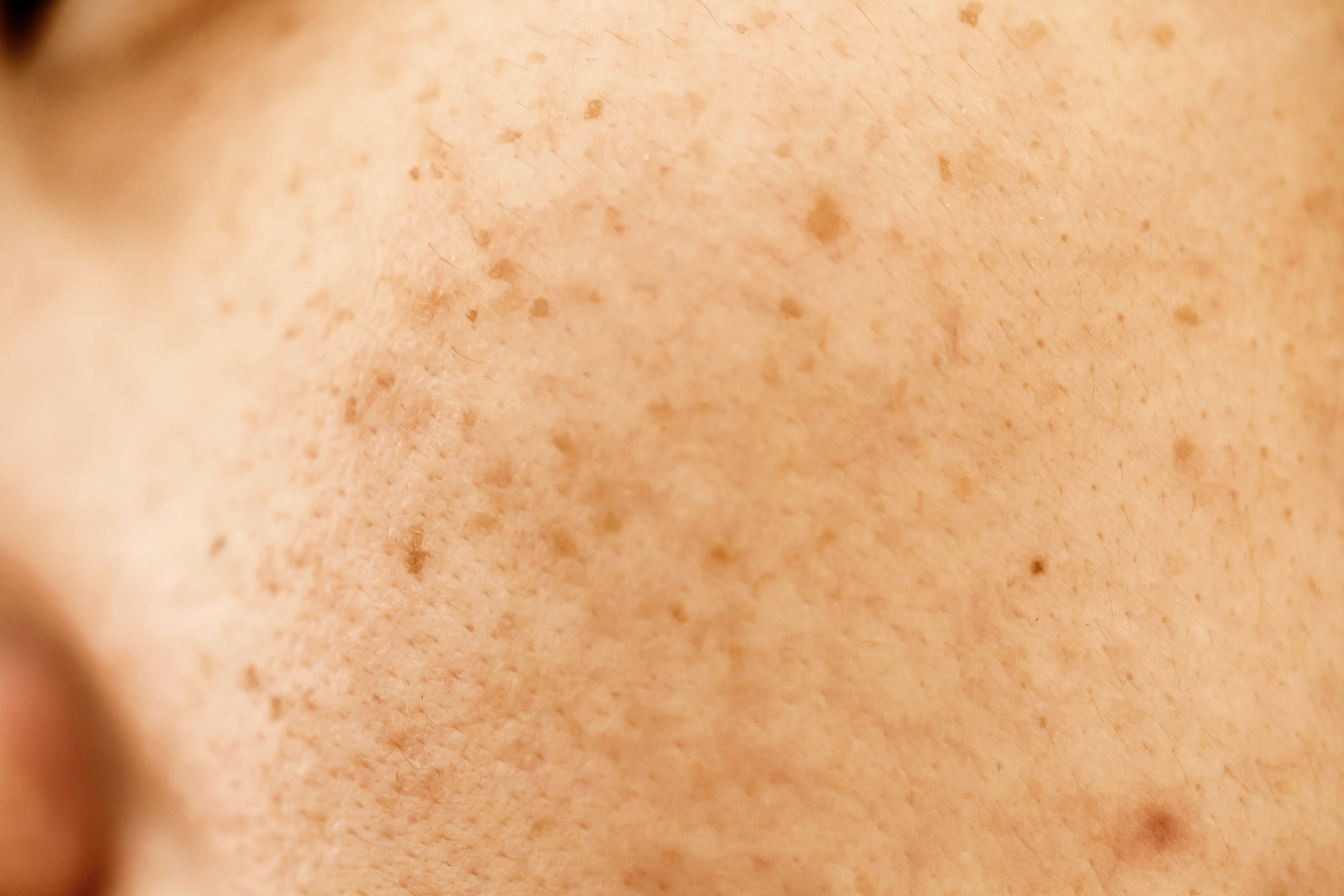
What are facial blemishes?
Facial blemishes are discoloured spots or marks caused by an uneven distribution of melanin, the pigment responsible for skin colour. They can result from a variety of factors, including sun exposure, hormonal changes, ageing, acne, allergies, certain medications, and underlying skin conditions.
Although most blemishes are harmless, understanding their cause and type is essential to choose the right treatment and prevent new ones from forming.
Because the face is constantly exposed to sunlight, pollution, and environmental stress, blemishes tend to appear there more than anywhere else. If you notice changes in colour, size, or texture of any spot, always consult a dermatologist for a professional assessment.
Types of facial blemishes
Different types of blemishes have different causes and appearances. Here’s a closer look at the most common forms of pigmentation and how they can be managed effectively.
1. Dark spots (hyperpigmentation)
Dark spots — including freckles, moles, lentigines, or birthmarks — are among the most recognisable facial blemishes. They can range from light brown to deep black, and vary in size, shape, and texture.
Common causes:
- Genetic predisposition
- Hormonal imbalances
- Medication side effects
- Acne scarring or post-inflammatory hyperpigmentation
If dark spots change in size, colour, or texture, it’s important to seek medical advice, as early detection of abnormal pigmentation can prevent serious skin conditions such as melanoma.
2. Solar lentigines (sunspots or age spots)
Solar lentigines appear as flat, brown patches on areas frequently exposed to sunlight — such as the face, hands, and arms. They are caused by UV damage that disrupts the skin’s pigment cells (melanocytes), leading to uneven melanin production.
Additional triggers:
- Chronic sun exposure
- Ageing
- Genetic predisposition
- Artificial UV exposure (e.g., tanning beds)
Preventing new sunspots starts with daily SPF use, even on cloudy UK days.
3. White spots on the face
White spots can develop for several reasons:
-
Pityriasis versicolor: A fungal infection that causes uneven white patches, often spreading without treatment.
-
Vitiligo: An autoimmune disorder that destroys pigment cells, creating sharply defined white patches.
-
Hypomelanosis: Caused by sun damage, leading to lighter areas on the skin.
-
Atopic dermatitis / pityriasis alba: Produces dry, scaly white spots, especially on the cheeks.
White patches can also result from genetic factors, corticosteroid use, or vitamin B12 deficiency. Consultation with a doctor or dermatologist is recommended for an accurate diagnosis.
4. Red spots and facial redness
Red spots are often linked to dermatitis or allergic reactions, but can also result from acne, rosacea, or irritation caused by fragrances and harsh skincare ingredients.
Main triggers:
-
Allergies and skin sensitivity
-
Perfumes, jewellery, or cosmetic reactions
-
Hormonal fluctuations
-
Environmental factors such as heat, alcohol, spicy food, or UV exposure
If your skin is reactive, choose soothing and hydrating products designed for sensitive skin. This helps to calm redness, reduce inflammation, and restore an even tone.
5. Hormonal spots (melasma)
Hormonal pigmentation, commonly known as melasma, appears due to fluctuations in oestrogen and progesterone levels — often during pregnancy, menopause, or contraceptive use.
Melasma usually manifests as irregular, brown-grey patches across the forehead, cheeks, upper lip, and chin. Sun exposure can intensify the pigmentation, so daily sunscreen application is vital to manage and prevent flare-ups.
How to minimise dark spots on the face
At SkinCeuticals, we understand that pigmentation concerns can affect confidence. The following targeted routine is designed to reduce dark spots, improve uneven tone, and prevent future discolouration.
Step 1: cleanse – Blemish + Age Cleanser or Gentle Cleanser
Cleansing is the foundation of any effective skincare routine. It removes impurities, excess oil, makeup, and pollution, allowing serums and moisturisers to work optimally.
-
For dry or sensitive skin: use Gentle Cleanser to soothe and hydrate.
-
For oily or blemish-prone skin: opt for Blemish + Age Cleanser to refine pores and control sebum.
A clean skin surface improves absorption of active ingredients and helps prevent clogged pores that lead to blemishes.
Step 2: antioxidant protection – Phloretin CF Vitamin C Serum
💬 “Start with a Vitamin C serum that delivers at least 10% L-Ascorbic Acid. I recommend SkinCeuticals Phloretin CF as it helps prevent pigmentation and provides powerful antioxidant protection.” – Dr Jonquille Chantrey, Aesthetic Doctor
Phloretin CF (£165.00 / 30ml) combines 15% pure Vitamin C (L-Ascorbic Acid) with 2% Phloretin and 0.5% Ferulic Acid to target environmental damage and reduce dark spots.
-
Neutralises free radicals
-
Improves skin brightness and clarity
-
Reduces uneven tone
Apply 4–5 drops to the face, neck, and chest each morning before moisturiser.
Step 3: correct – Discoloration Defense Serum
Discoloration Defense Serum (£110.00 / 30ml) is a multi-phase brightening treatment formulated with tranexamic acid, niacinamide, and HEPES to fade visible dark spots and post-blemish marks.
-
Targets uneven pigmentation
-
Reduces recurrence of discolouration
-
Suitable for all skin types
Apply 3–5 drops to the affected areas, gently pressing into the skin until fully absorbed.
Step 4: moisturise
Keeping skin hydrated maintains its barrier and improves resilience against pigmentation triggers like dryness and UV stress.
Look for moisturisers enriched with hyaluronic acid, vitamin B5, and glycerin to lock in moisture and boost radiance.
Step 5: protect – Advanced Brightening UV Defense SPF 50
💬 “It’s one of my favourite sunscreens to recommend. It treats and prevents hyperpigmentation thanks to niacinamide, tranexamic acid and high SPF protection.” – Dr Derrick Phillips, Consultant Dermatologist
Advanced Brightening UV Defense SPF 50 (£52.00 / 40ml) provides broad-spectrum UVA/UVB protection while correcting existing discolouration.
-
Contains tranexamic acid and niacinamide
-
Prevents photoageing
-
Suitable for all skin types
Apply generously every morning as the final step of your skincare routine.
How to prevent facial blemishes
To maintain an even skin tone and minimise pigmentation:
-
Wear SPF daily — even indoors or on cloudy days.
-
Limit direct sun exposure, especially during peak hours.
-
Use antioxidant serums (Vitamin C) and exfoliants (like glycolic acid) to promote cell renewal.
-
Keep skin hydrated with quality serums and moisturisers.
-
Stay hydrated — drink sufficient water throughout the day.
-
Avoid picking blemishes, which can worsen pigmentation.
Following these steps and incorporating SkinCeuticals’ Discoloration Defense Serum and Advanced Brightening UV Defense SPF 50 will help visibly reduce dark spots and prevent new ones from appearing, revealing a brighter, more even complexion.


