

A new year is the perfect time to review your skincare routine. Many people start January wanting healthier, brighter or clearer skin, but the most effective routines are rarely the most complicated ones.
In fact, using too many products at once can sometimes make the skin feel confused, irritated or overwhelmed.
A simple, consistent skincare routine built around your skin type and your main concerns can deliver better results than a crowded shelf full of products you rarely use.
Why a simple skincare routine works best
Good skincare does not need to be complicated. Your skin usually responds better to consistency than to constant product changes.
A strong routine should do four things:
- Cleanse: Remove makeup, SPF, oil and impurities.
- Treat: Target your main skin concern.
- Moisturise: Support hydration and the skin barrier.
- Protect: Use daily SPF to help prevent UV damage.
Once these basics are in place, you can add extras such as masks, exfoliators, eye creams or stronger active ingredients.
But the foundation should always come first.
Step 1: Choose the right cleanser
Cleansing is the first step in every routine. It helps remove daily impurities, excess oil, makeup, SPF and pollution.
Your cleanser should leave your skin feeling clean but comfortable. If your face feels tight, dry or squeaky-clean after washing, your cleanser may be too harsh.
For dry or sensitive skin, choose a cream or gentle hydrating cleanser.
For oily or blemish-prone skin, a gel cleanser or a cleanser with ingredients such as salicylic acid may be useful.
For evening routines, especially if you wear makeup or water-resistant SPF, double cleansing can help. Start with an oil or balm cleanser, then follow with a gentle second cleanse.
Step 2: Pick one main skin concern
One of the biggest mistakes people make is trying to treat everything at once.
Instead, choose your main skin concern and build your routine around it.
Common skin goals include:
- Dryness: Focus on hydration and barrier support.
- Dullness: Look for vitamin C, gentle exfoliation and hydrating serums.
- Fine lines: Consider retinol, peptides and daily SPF.
- Breakouts: Look for salicylic acid, niacinamide and lightweight moisturisers.
- Pigmentation: Focus on SPF, antioxidants and brightening ingredients.
- Sensitivity: Keep the routine gentle, calming and fragrance-conscious.
Once your skin is stable, you can slowly introduce more targeted products.
Step 3: Add a serum with purpose
Serums are designed to deliver concentrated ingredients to the skin. They can be very effective, but only when chosen carefully.
A serum should match your skin goal.
For example:
- Vitamin C serum: Best for dullness, uneven tone and environmental protection.
- Hyaluronic acid serum: Best for dehydration and plumpness.
- Niacinamide serum: Best for barrier support, redness, pores and oil balance.
- Retinol serum: Best for fine lines, texture and signs of ageing.
- Salicylic acid serum: Best for blemishes, congestion and oily skin.
You do not need five serums in one routine. One well-chosen serum used consistently is often enough.
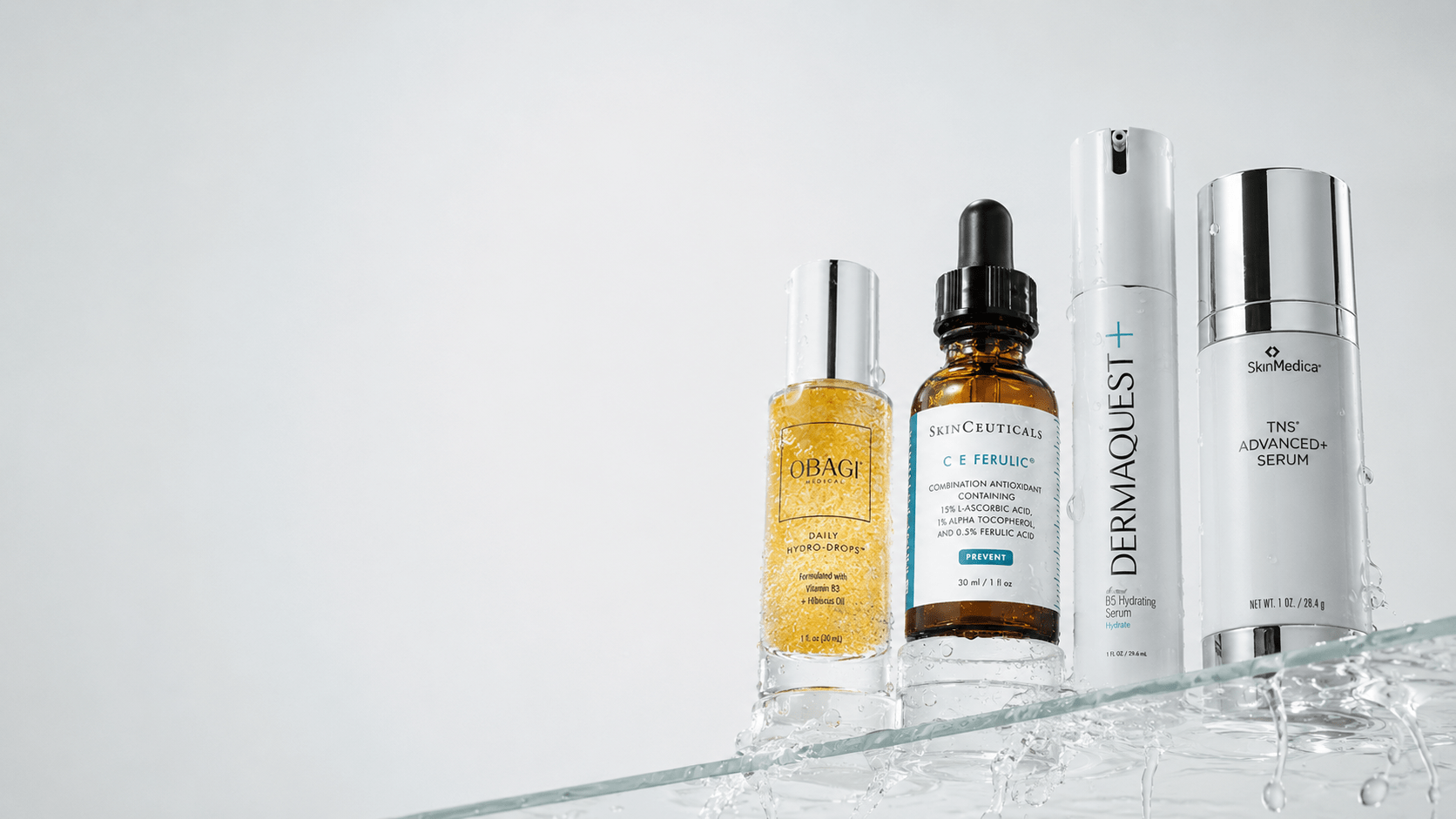
A product like SkinCeuticals C E Ferulic can be a strong morning option for antioxidant protection and radiance, while a hydrating serum can be useful if your skin feels dry or tight during winter.
Step 4: Moisturise every day
Moisturiser is important for every skin type, including oily skin.
The role of moisturiser is to support the skin barrier, reduce water loss and keep the skin feeling comfortable.
The texture should depend on your skin type:
- Oily skin: Lightweight gel or lotion.
- Combination skin: Balancing lotion or gel-cream.
- Dry skin: Rich cream or balm-like texture.
- Sensitive skin: Gentle, soothing moisturiser with barrier-supporting ingredients.
- Mature skin: Nourishing cream with peptides, ceramides or lipids.
If your skin feels dry in winter, you may need a richer moisturiser at night. Products such as Obagi Hydrate or SkinCeuticals Triple Lipid Restore 2:4:2 can be helpful for skin that needs extra comfort and barrier support.
Step 5: Use SPF every morning
SPF is one of the most important steps in any skincare routine.
Even in the UK, and even on cloudy days, UV exposure can contribute to premature ageing, pigmentation, uneven tone and loss of firmness.
Apply SPF as the final step of your morning routine, after moisturiser and before makeup.
A simple morning routine could look like this:
- Cleanser
- Vitamin C or hydrating serum
- Moisturiser
- Broad-spectrum SPF
The best SPF is one you enjoy using every day. If the texture feels too heavy or greasy, try a lighter formula until you find one that suits your skin.
Step 6: Keep your evening routine focused
Your evening routine is the best time to cleanse properly and use targeted treatments.
A simple evening routine could look like this:
- First cleanse, if wearing makeup or SPF
- Gentle second cleanse
- Treatment serum or retinol
- Moisturiser
If you are new to retinol, start slowly. Use it once or twice a week at night, then gradually increase if your skin tolerates it.
Avoid using strong exfoliating acids and retinol on the same night unless your skin is already used to both. Too many active ingredients can lead to dryness, peeling and irritation.
Step 7: Add extras only when needed
Once your basic routine is consistent, you can add extra products depending on your skin goals.
Helpful extras include:
- Eye cream: For dryness, puffiness or tired-looking eyes.
- Exfoliator: For dullness, rough texture or clogged pores.
- Face mask: For hydration, glow or calming the skin.
- Lip care: Especially during winter.
- Facial oil: For very dry skin or night-time nourishment.
Extras should support your routine, not replace the basics.
If your skin becomes irritated, go back to cleanser, moisturiser and SPF until it feels calm again.
The takeaway
A good skincare routine does not need to be complicated. The best routine is one that suits your skin, targets your main concern and feels easy enough to follow every day.
Start with the basics: cleanser, serum, moisturiser and SPF.
Once your skin feels balanced, you can slowly add more targeted treatments such as retinol, exfoliating acids or masks.
For the new year, focus on consistency rather than perfection. Your skin will thank you for it.


