

After summer, your skin may need a reset. Holidays, heat, SPF, sweat, travel, late nights and changes in routine can all affect how your complexion looks and feels.
You may notice dehydration, dullness, uneven tone, clogged pores or more sensitivity than usual. This is completely normal after a busy summer.
The best back-to-routine skincare plan should help your skin feel balanced again without overwhelming it. The goal is to return to consistency, support the skin barrier and slowly reintroduce targeted products.
Why your skin may feel different after summer
Summer can be enjoyable, but it can also disrupt your skin. Even if you were careful with SPF, your skin may still feel less balanced after weeks of heat, travel and outdoor time.
Common post-summer skin concerns include:
- Dehydration: Skin may feel tight, dull or less plump.
- Pigmentation: Dark spots and uneven tone can become more visible.
- Congestion: SPF, sweat and makeup can contribute to clogged pores.
- Sensitivity: Sun exposure and travel can make the skin barrier more reactive.
- Breakouts: Changes in routine, humidity and product build-up can trigger blemishes.
- Rough texture: Salt water, chlorine and dehydration can leave skin feeling uneven.
A skincare reset should start with the basics before moving back into stronger active ingredients.
Step 1: return to consistent cleansing
Cleansing is the first step in getting your routine back on track. After summer, it is especially important to remove SPF, sweat, oil, makeup and pollution properly.
In the evening, double cleansing can be helpful if you wear sunscreen or makeup every day.
A simple evening cleanse could look like this:
- Cleansing balm or oil to remove SPF and makeup
- Gentle cleanser to clean the skin
Choose a cleanser that leaves your skin feeling comfortable, not tight. If your skin feels dry or sensitive, avoid harsh foaming cleansers and strong scrubs.
Your cleanser should support your reset, not strip your skin.
Step 2: focus on hydration first
Before adding acids, retinol or brightening treatments, make sure your skin is hydrated.
Post-summer dehydration can make fine lines look more noticeable, makeup sit unevenly and the complexion appear dull.
Look for hydrating ingredients such as:
- Hyaluronic acid: Helps attract and hold water in the skin.
- Glycerin: Supports softness and hydration.
- Panthenol: Helps comfort dry-feeling skin.
- Aloe vera: Can help refresh and soothe.
- Niacinamide: Supports the skin barrier and helps with uneven tone.
Apply a hydrating serum before moisturiser, morning and evening if needed.
Hydrated skin is usually more tolerant of active ingredients later.
Step 3: repair the skin barrier
If your skin feels tight, red, rough or reactive, your barrier may need extra support. A strong barrier helps the skin retain moisture and respond better to treatments.
Barrier-supporting ingredients include:
- Ceramides
- Squalane
- Peptides
- Fatty acids
- Niacinamide
- Glycerin
- Panthenol
Use a moisturiser that suits your skin type. Oily or combination skin may prefer a lightweight moisturiser, while dry or sensitive skin may need a richer cream.
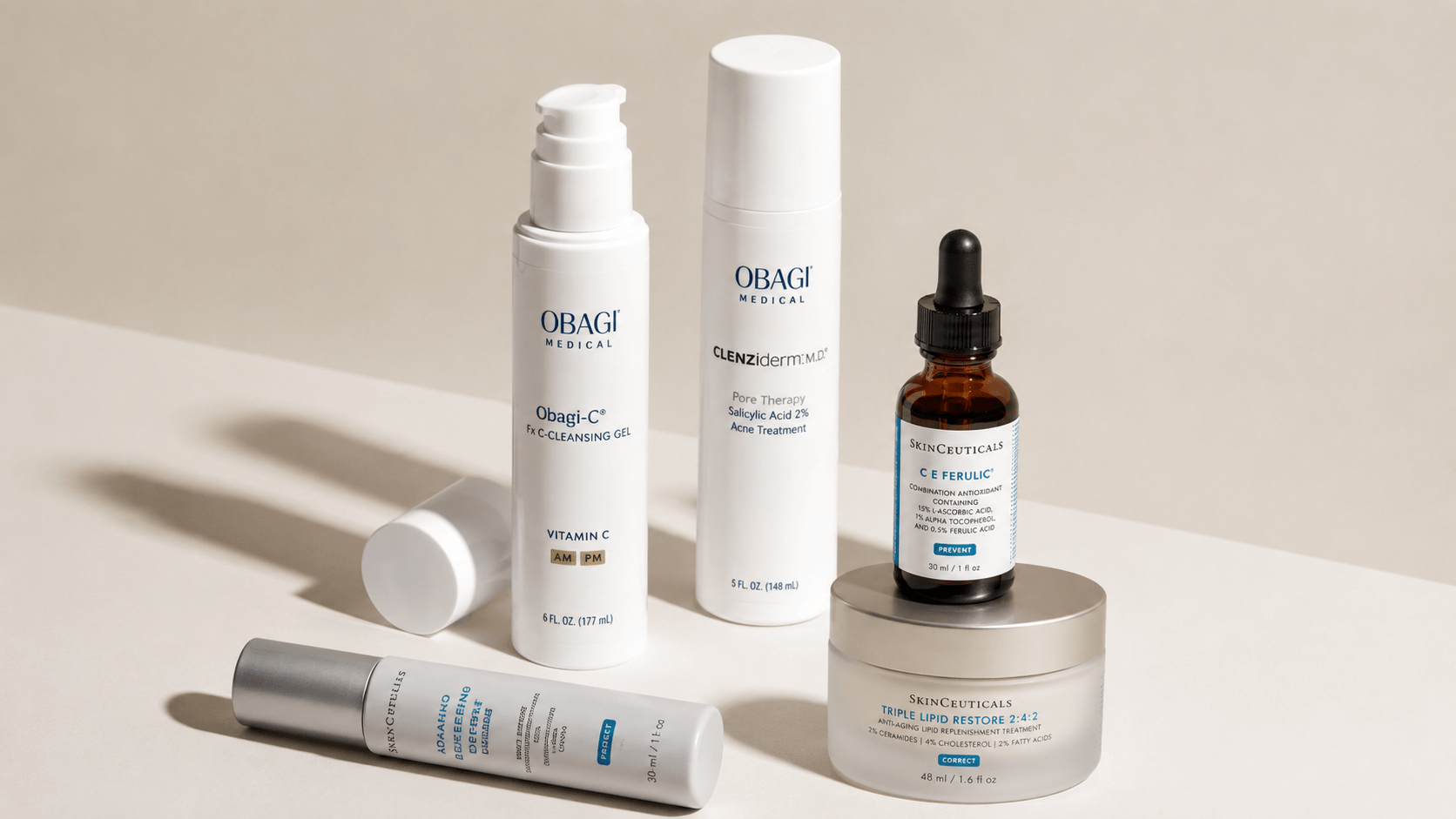
Products such as Obagi Hydrate Luxe or SkinCeuticals Triple Lipid Restore 2:4:2 can be useful if your skin feels dry, depleted or in need of extra comfort after summer.
Step 4: keep SPF in your daily routine
Even as summer starts to wind down, SPF should remain part of your morning routine.
UV rays are present throughout the year and can still contribute to pigmentation, premature ageing and uneven tone.
Apply broad-spectrum SPF every morning to:
- Face
- Neck
- Ears
- Chest
- Hairline
- Backs of hands
If you are using vitamin C, retinol or exfoliating acids, SPF is especially important.
Do not let SPF become only a summer habit. It should be a daily skincare essential.
Step 5: reintroduce exfoliation slowly
If your skin looks dull or rough after summer, exfoliation can help. But it should be reintroduced carefully, especially if your skin has had a lot of sun exposure.
Start with gentle exfoliation once a week.
Good options include:
- Lactic acid: Useful for dry or dull-looking skin.
- Mandelic acid: A gentler option for sensitive or blemish-prone skin.
- Salicylic acid: Helpful for oily, congested or breakout-prone skin.
- Glycolic acid: Good for texture if your skin already tolerates it.
Avoid exfoliating if your skin feels sunburned, peeling, hot or irritated.
If products sting or your skin feels tight, pause exfoliation and focus on barrier repair.
Step 6: bring back vitamin C for radiance
Vitamin C can be a useful ingredient after summer if your skin looks dull, uneven or tired.
It works well in a morning routine before moisturiser and SPF.
Vitamin C may help with the appearance of:
- Dullness
- Uneven tone
- Dark spots
- Post-blemish marks
- Loss of radiance
- Environmental stress
A product such as SkinCeuticals C E Ferulic can be a strong option for antioxidant support and brighter-looking skin.
If your skin feels sensitive after summer, introduce vitamin C gradually. Start a few mornings a week, then increase if your skin tolerates it.
Step 7: restart retinol with care
If you reduced or paused retinol during summer, do not rush straight back to frequent use.
Start slowly and listen to your skin.
A gentle retinol return could look like this:
- Week 1: once a week
- Week 2: once or twice a week if tolerated
- Week 3 onwards: increase only if skin feels calm
Use retinol at night, apply moisturiser well and avoid using exfoliating acids on the same evening.
If your skin becomes dry, flaky or irritated, reduce frequency and focus on hydration.
Retinol works best when your skin barrier is supported.
Step 8: manage post-summer breakouts
Breakouts after summer are common. Sweat, SPF, travel, humidity and inconsistent cleansing can all contribute to congestion.
To help calm breakouts:
- Cleanse thoroughly at night
- Use lightweight moisturiser
- Choose non-comedogenic SPF
- Avoid picking spots
- Use salicylic acid if your skin tolerates it
- Keep the skin barrier supported
If your skin is both breaking out and dry, avoid using harsh acne products all over the face. Treat blemishes locally and keep the rest of your routine gentle.
A simple back-to-routine skincare plan
A balanced routine could look like this:
Morning:
- Gentle cleanser
- Hydrating serum or vitamin C
- Moisturiser
- Broad-spectrum SPF
Evening:
- First cleanse to remove SPF and makeup
- Gentle second cleanse
- Hydrating serum, retinol or exfoliant depending on the night
- Moisturiser
Keep exfoliation and retinol on separate nights, especially if your skin is sensitive.
What not to do after summer
To avoid irritating your skin, try not to:
- Start several active ingredients at once
- Use strong acids every night
- Restart retinol too quickly
- Skip moisturiser
- Forget SPF
- Scrub rough skin aggressively
- Pick at blemishes
- Use harsh cleansers
- Expect pigmentation to fade immediately
A good reset is gradual. Give your skin time to return to balance.
The takeaway
After summer, your skin may need hydration, barrier repair and a return to consistency. Start with gentle cleansing, moisturiser and SPF, then slowly reintroduce active ingredients such as vitamin C, exfoliating acids or retinol.
The best back-to-routine skincare plan is not about doing everything at once. It is about helping your skin feel calm, hydrated and protected before moving into stronger treatments.
A consistent routine now will help prepare your skin for the months ahead.


